The Great Bitcoin Treasure Hunt: Who Actually Owns It?
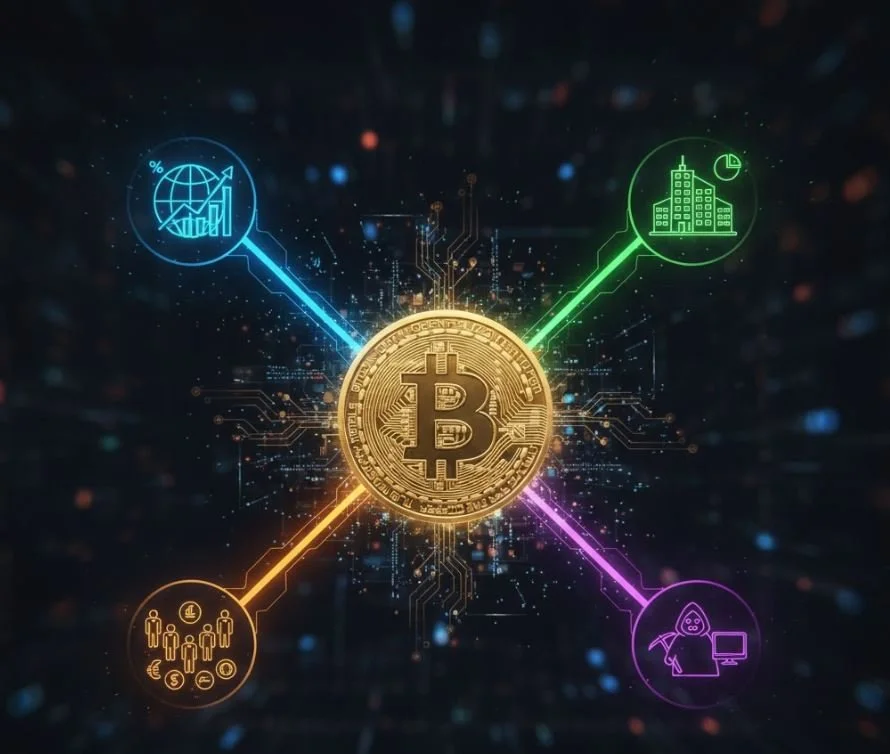
Bitcoin distribution
Have you ever wondered, "Who actually has all the Bitcoin?" you aren't alone. It is the ultimate digital whodunit. We know there will only ever be 21 million coins, but where are they hiding right now? Are they all in a secret underground bunker in Switzerland? (Spoiler: Xapo actually has one of those).
I’ve spent the last two decades writing about tech, but nothing is quite as fascinating as the distribution of the world's first digital commodity. I’ve dug into the data from the best trackers in the industry River, Bitinfocharts, and others to bring you the truth.
So, grab a drink, sit back, and let’s follow the money.
The Big Picture: The "Who's Who" of Crypto
First, let’s bust a myth: Bitcoin isn't just owned by shadowy super-coders. The reality is surprisingly democratic, though with a heavy dose of "whale" power at the top.
According to data from River Financial, the vast majority of Bitcoin roughly 57% to 69% (depending on how you count lost coins) is held by regular individuals like you and me. But the "big buckets" are growing fast. We have the "Satoshi Stash" (coins mined by the creator that haven't moved in over a decade), the rising tide of ETFs, and now, nation-states entering the chat.
Here is the global breakdown of who owns the 21 million slice of the pie:

Global Bitcoin ownership
The Corporate Raiders: Saylor’s Super Stash
A few years ago, it was unheard of for a public company to put Bitcoin on its balance sheet. Then came Michael Saylor.
Saylor's company, MicroStrategy, has essentially become a Bitcoin black hole, sucking up every coin it can find. According to BitcoinTreasuries.net, they are in a league of their own, holding over 660,000 BTC. To put that in perspective, that is more than the US government and the Chinese government combined.
Other players like Marathon Digital and Tesla are in the mix, but the gap between #1 and #2 is staggering.
Nation States: The Geopolitics of HODLing
This is where it gets spicy. Some countries bought Bitcoin because they believe in the tech (hello, El Salvador!). Others "acquired" it... involuntarily.
According to Bitbo.io, the United States and China are the two largest government holders, but neither bought their coins on an exchange. They seized them from bad actors (like the Silk Road crackdown). Meanwhile, the Kingdom of Bhutan has been quietly mining Bitcoin using its abundant hydroelectric power, amassing a fortune that rivals major tech companies.
The Little Guys vs. The Whales
Finally, let’s look at the "Wealth Distribution." Are we all fighting for scraps while the whales feast?
Data from BitInfoCharts paints a clear picture. The vast majority of addresses (over 90%) hold less than 0.1 BTC ("shrimps" and "crabs"). Meanwhile, the "Whales" (10 BTC to 10k BTC) hold a massive chunk of the total supply.
It’s a classic "Pareto distribution"—a small number of addresses hold a large amount of the wealth. However, don't let the chart fool you; many of those massive addresses are actually Exchanges (like Coinbase or Binance) holding coins for millions of regular users.
The Verdict
The landscape is shifting. What started as a playground for cypherpunks (and Satoshi) has evolved into a global asset class held by Wall Street giants, sovereign nations, and public corporations.
But the most important stat? Individuals still own the majority. The revolution is still, technically, in our hands.
I’ve compiled a bunch of charts for you below all relating to Bitcoin distribution amongst countries, companies and individuals - enjoy.
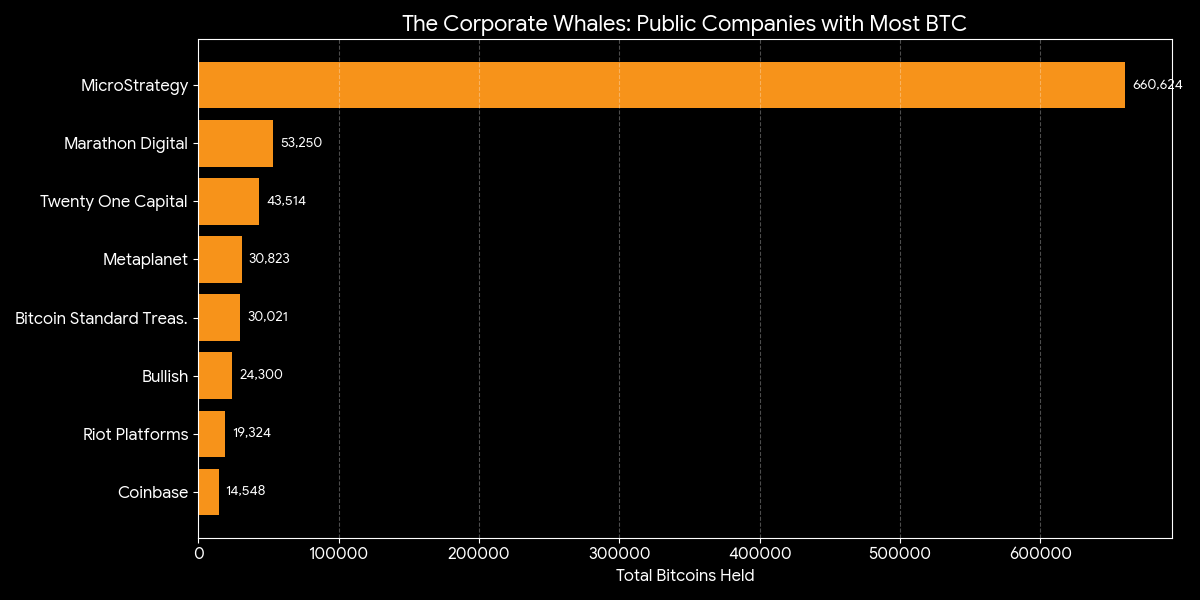
The Corporat Whales

Nation State Hodlers

Wealth Distribution